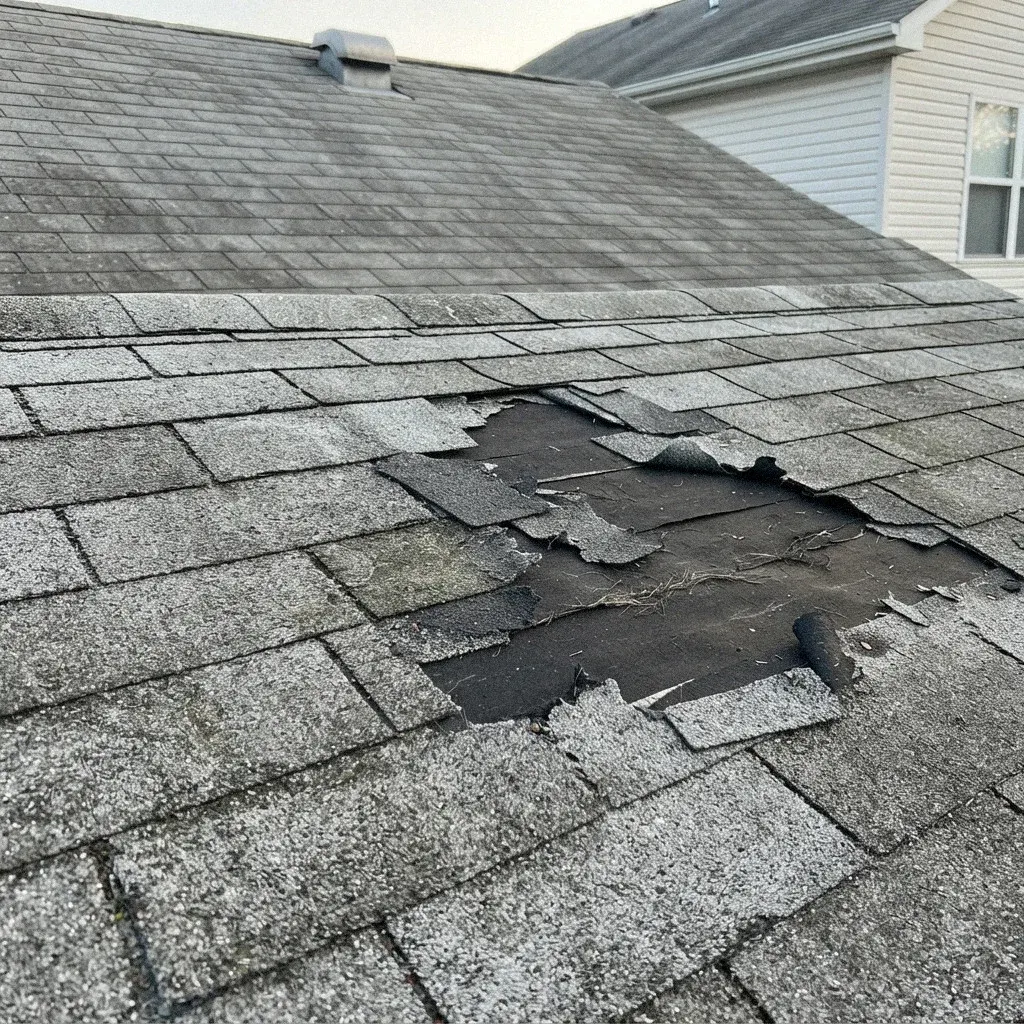
Danbury Roof Leak Repair for Underlayment
In Danbury, the repair boundary depends on what the roof covering reveals about underlayment condition and access.
The underlayment sits beneath the roof covering, so the damaged layer may stay hidden until the covering is lifted for inspection. If deterioration continues beyond that boundary, broader work may be needed.
Roof Leak Repair Starts Beneath Covering
Under the roof covering, underlayment helps direct water toward the roof edge when rain gets past the outer layer. A roof underlayment leak develops when a tear, puncture, or failed joint lets water continue inward. In Danbury, cold-season freezing and snowfall are part of the climate context, but they do not establish what failed on a particular roof. The pros we connect you with need to see the exposed material before deciding whether underlayment repair can stay confined to one area.
A localized failure has a boundary that can be identified: damaged material ends, and the layer around it still holds together. That distinction matters more than the size of a ceiling mark, which may be separated from the roof opening. In Danbury, a roofer should explain what visible evidence sets the proposed repair limits and whether the material just beyond them appears usable. If the edge cannot be established from the area opened, a small scope may leave part of the failure untreated.
The covering affects how the underlayment can be inspected and reached. On a tile roof, access may involve carefully lifting and resetting tiles; other roof assemblies require a different approach. Danbury homes do not all share one verified roof material, so the covering on your house should guide the assessment. Ask what must be moved, how the exposed layer will be checked, and whether the covering can be put back in service after the underlayment work.
Roof Leak Repair Depends on Access
Access should reveal enough material to judge the suspected spot and its perimeter. Around Danbury, whether a home is near Ball Pond or elsewhere in the city, the actual roof assembly—not the location—determines how much covering must be moved. The pros we connect you with should describe the opening needed to inspect the underlayment and how they will protect and reset the covering. If the inspection leaves the suspected edge hidden, ask what can and cannot be confirmed.
A repair is easier to bound when the adjacent layer stays flexible and attached, with no new splits appearing as the damaged section is examined. The roof covering can hide the full edge of a tear until the underlayment is exposed for inspection. In Danbury, ask the pros we connect you with to show where the material remains sound and where it starts to fail. That visible transition gives you a clearer basis for judging whether a patch or limited section replacement fits.
Roof geometry can restrict the view even after the covering is lifted. At a roof intersection or beneath overlapping courses, a small opening may not expose the full joint or edge that needs assessment. For a Danbury property, ask the pros we connect you with to identify any area that stayed concealed and explain how that limits the repair decision. A clear account of inspection limits helps you distinguish confirmed damage from conditions that still need examination.
Roof Leak Repair Follows Sound Edges
Material that tears again beside the first opening, crumbles at its edge, or shows separated failures nearby may not provide a reliable base for a confined repair. The concern is whether the surrounding layer can continue to shed water after the damaged piece is addressed. In Danbury, rain and winter precipitation describe possible exposure, not proof of widespread deterioration. The decision should rest on what the opened roof actually reveals, including whether damage continues past the proposed boundary.
Broader replacement may be appropriate when the exposed layer has several breaks, repeated failed joints, or a weakened area that extends beyond one repairable section. It can also be considered if the roof covering cannot be reset securely after a small opening. Around Danbury and nearby New Fairfield, the condition of each roof must be assessed on its own. Ask the pros we connect you with to connect any wider recommendation to specific observed damage and the area it affects.
Roof Leak Repair May Need Wider Work
Before work begins, have the scope identify the roof plane, the underlayment defect, and the repair boundary. Ask what material will be added or replaced and how the covering will be restored over it. In Danbury, whether the property is near Squantz Pond or in another part of the area, those details should come from the inspected roof, not a general assumption about local homes. A written scope lets you compare the observed failure with the work proposed.
Ask for photographs of the underlayment while it is exposed, including a wider view that shows where the repair sits on the roof. A brief written note can record the material condition at the boundary and any section that could not be inspected. For a Danbury roof, that record helps you understand whether the work addressed the visible failure or uncovered a reason to expand it. Keep the documentation with the repair scope for future reference.
Roof Leak Repair Boundary Checks
- Ask the pros we connect you with to mark the observed underlayment failure and show where the surrounding material remains intact.
- Ask the licensed pros we connect you with to show which underlayment pieces were removed and replaced.
- Request exposed-area photos and a note describing any portion of the suspected failure that remained concealed.
- Near Tarrywile Park, compare exposed underlayment with the material beside it; a limited area of damage with sound surrounding material may support a local repair.
- Where the covering is opened near Route 22, record whether underlayment beyond the leak area stays dry and firm; continuing moisture or softness may widen the repair.
- At a home near Candlewood Town Park, note whether separate openings show similar brittleness or separation; repeated deterioration can indicate the failure is not isolated.
Roof Leak Questions
What makes underlayment damage suitable for a local repair?
A confined repair fits when the opened roof shows one identifiable tear or failed joint and the underlayment around it remains intact enough to support a repair. The edge should be visible, and the roof covering should be capable of being reset. In Danbury, ask the pros we connect you with to show the boundary they found and explain any area that remains hidden.
How can roofers reach underlayment beneath the roof covering?
It can, if the underlayment opening is the point letting water through and the surrounding material can hold a compatible repair. The roof covering must also be restored so water continues to move over the assembly as intended. In Danbury, the pros we connect you with should explain what the inspection confirmed and what evidence supports the repair limits.
Which findings show a leak repair may need wider replacement?
Wider work may be needed when the exposed underlayment has separate breaks, weak edges, or failed joints continuing beyond the proposed repair. The pros we connect you with should identify those findings and show how far they extend before recommending replacement. In Danbury, ask which parts were visible and whether concealed areas affect the scope.
Ask What Defines the Repair Boundary
Ask the pros we connect you with to document the covering access, underlayment condition, and findings that set the repair boundary.
Call (475) 897-6140