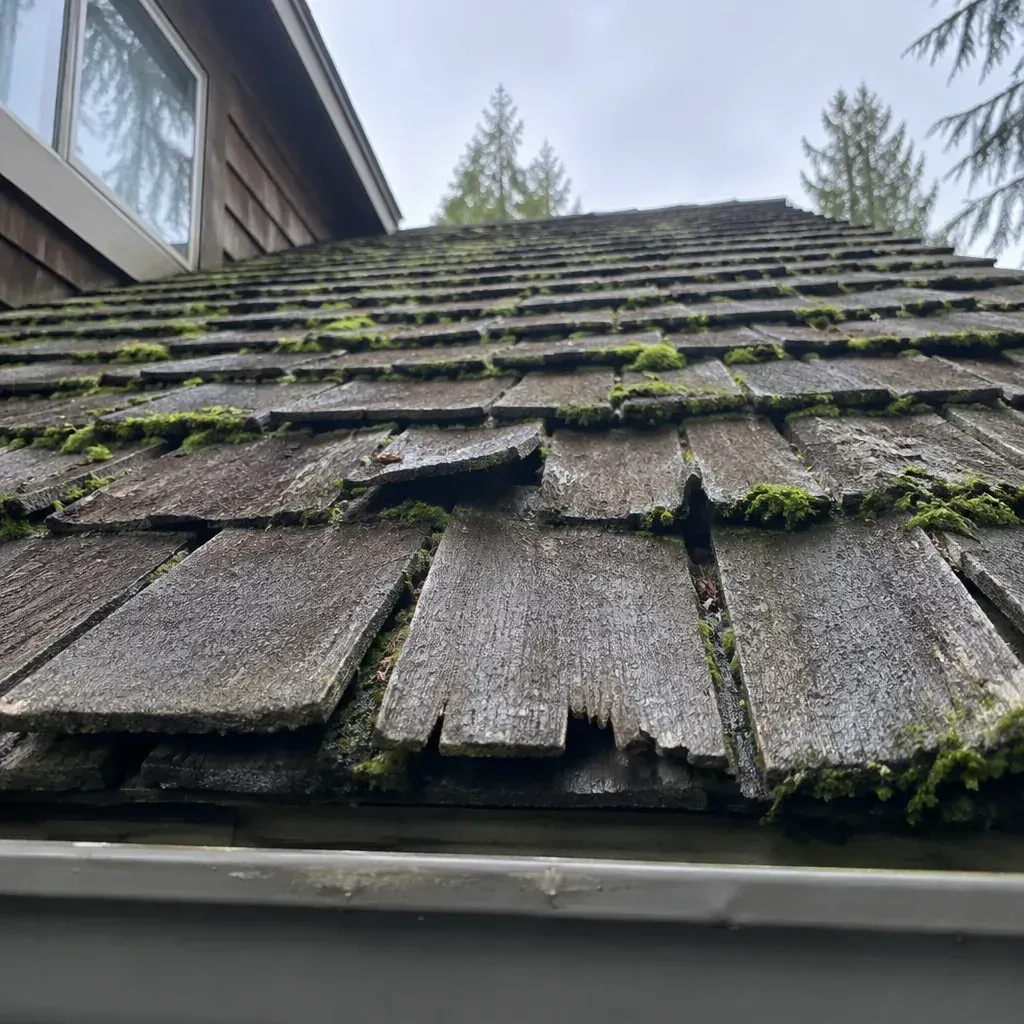
Matching Repair Scope to Roof Damage
Danbury's NOAA climate normals document precipitation and winter freezing conditions. Rain and snow can test the layered edges of shakes and roof details, while freezing weather may affect how moisture shows up. Routine visual checks can reveal changes in shake condition before water reaches indoor finishes.
Danbury spans settings near Candlewood Town Park and Farrington Woods, as well as around Western Connecticut State University. A home's exposure and roof design still require an address-specific look; the pros we connect you with should base shake or flashing work on what they find.
Some roof leak requests start in Danbury; others come from elsewhere in Western Connecticut. Give the pros we connect you with the property location so they can establish whether they serve that area before you plan next steps.
Matching Repairs to Roof Findings
- VISIBLE CLUES
- A split shake can admit rain, and the underlayment beneath it may show whether moisture reached a lower layer.
- SHAKE SWAP
- A replacement shake needs to fit the existing course; differences in size or overlap can leave a weak spot.
- METAL JOINTS
- Moisture or softened wood beneath a shake can mean the repair needs to address more than the visible piece.
- UNDERLAYMENT
- A shake roof is made of individual pieces, so repair work may focus on a limited area.
- ROOFER REVIEW
- Stay off wet or steep slopes. Near Candlewood Town Park or Farrington Woods, note leak timing and roof age; ask a roofer to compare shake, flashing, and underlayment evidence.
- Water Control
- Seasonal roof checks can help catch loose or split shakes before leaks become visible indoors. Moisture may become noticeable during or after precipitation, while dry weather can make an active entry harder to observe.
- ESTIMATE BASIS
- an estimated $90–$350
Using Attic Evidence to Narrow the Leak Path
Wood shake maintenance. It concerns care of the roof covering as a whole, while leak repair responds to evidence of water entry and may focus on a damaged piece, flashing, or a lower layer. Compare the reported leak with the proposed task. Routine care addresses the condition of the shake covering; a leak repair should identify a suspected water entry point and name the damaged shake, flashing, or underlying layer being addressed. Ask what inspection finding supports each repair item.
Roof Leak Repair and Indoor Water Control
Before work begins, ask the roofer to explain which repair options fit the inspection findings. They also inspect flashing and nearby transitions. The findings help distinguish a defect in a shake from a problem in the metal or lower roof layer.
For a shake defect, the roofer removes the damaged piece and examines the exposed underlayment and wood before fitting a replacement. If flashing is loose, corroded, or damaged, they repair or replace that section and restore the overlap. They can document the work area and any material that needs further attention.
When attic clues and the roof surface point to one repairable opening, the correction may fit into that visit. Water tracking along framing, dampness in several places, or a source that remains uncertain after rain calls for further checking. Ongoing visits should address a documented pattern, not become a default commitment.
VISIBLE ROOF CLUES THAT SHAPE REPAIR TIMING
| Early Leak Clues |
One-Section Repair |
|---|
| A roof fault tied to one point | Shingle reset |
| Leak returns after completed roof work | Roof material check |
| Several leak traces, path still uncertain | Junction seals restored, shingles seated |
RUNOFF CHANNELSSave photos of the damaged area with your project records to show the condition discussed before work began. For a shake repair near Danbury Green or Route 8, ask the pro you connect with to state the work area, shake and flashing repairs, and any underlayment work in writing. Request an invoice that identifies completed work and materials.
Matching Roof Repairs to Inspection Findings
Rain passing through a split shake or failed flashing can dampen the underlayment and roof wood. Continued moisture may weaken those layers and reach insulation or ceiling finishes, expanding the repair beyond the visible opening. A roofer should identify what is wet and whether affected materials need replacement or drying.
Small Indoor Actions Before Roof Work
Keep off the roof. Indoors, move items away from drips, use a container if water is falling, and take photos of stains from a safe spot. Do not press on a sagging ceiling or wet drywall, because water can weaken the material. Share those details with the pros we connect you with, then leave shake removal and flashing work to a roofer.
Roof Leak Hazards Inside the Home
A leak through wood shakes can leave the roof deck damp after dripping stops; repeated wetting may soften the wood that holds fasteners. Water may stain an interior ceiling even when the leak began elsewhere on the roof. Avoid prying up neighboring shakes yourself, since disturbing sound pieces can loosen their fit. Homes near Tarrywile Park need the same care.
What Goes Into Roof Leak Repair Pricing?
Roof damage can affect shingles, flashing, or the edges around roof openings.For a Danbury home, the guide amount covers repair to the roof area tied to the inspected leak; separate upkeep and other roof issues sit outside it. A damaged vent boot or flashing joint can change the materials and labor involved. Ask the pros we connect you with how the inspection visit is billed and which components their proposal includes.Use pricing guide to compare what changes an estimate; Leak Inspection explains how inspection findings shape a roof leak repair.